Impact measurement and reporting matter. They help us understand what is working, learn from experience, demonstrate progress and make better-informed decisions. But for many of the people expected to do them, finding the time and resources to do them well, and regularly, is another matter entirely.
There is another challenge too: impact is rarely created by one person, one organisation or at one point in time.
Research can take years to translate into change. Conservation programmes may run for decades. NGOs work with delivery partners and communities. Funders support cohorts of organisations over multiple funding cycles. The people involved may change while the impact journey continues.
Yet the evidence is often fragmented across those people, organisations, documents and years.
What if AI could help us change that?
What if AI could take on more of the burden?
Much of the work surrounding impact is cognitively and administratively demanding: bringing information together, reviewing documents, identifying relevant evidence, structuring information, spotting gaps, drafting reports and translating complex activity into something another person can understand.
AI can help with that heavy lifting.
At Hivve, we believe AI should work from evidence, not invent it. By grounding AI-generated outputs in the research, activities, outcomes and supporting information people provide, we can help them develop more credible accounts of impact, identify what the evidence supports and understand where further information is needed.
This doesn’t mean handing impact over to a machine. Impact is contextual and human. Understanding why something changed, whose experience matters, what evidence is credible and what should happen next still requires expertise and judgement.
The opportunity is to combine the efficiency of AI with the knowledge and experience of the people closest to the work.
Impact happens together and over time
Good impact practice should reflect how impact actually happens.
Different collaborators may hold different parts of the evidence. A researcher has the underpinning work, a partner knows how it was used, a community can describe what changed, and a funder may see patterns across many projects.
If those contributions can be captured as the work develops, they create something much more useful than a report assembled retrospectively.
They create a shared, living evidence base that can develop with the project, programme or partnership.
As more relevant evidence is contributed over time, the picture becomes richer. AI can help make sense of that growing body of information – identifying connections, structuring evidence, highlighting gaps and supporting reporting, while keeping the people who understand its context at the centre.
Rather than starting from scratch each reporting cycle, organisations can build on what they already know, preserve valuable knowledge and develop a more complete understanding of their contribution to change.
The value of the evidence grows as the impact journey grows.
Making good impact practice more accessible
Rigorous impact practice requires time, knowledge and capacity. Historically, that has often favoured organisations with dedicated impact teams, specialist consultants or substantial resources.
AI creates an opportunity to change this.
Imagine a small programme team receiving practical guidance on what evidence to collect and where gaps remain that would otherwise be beyond its budget. A researcher and external partners building an impact story together over several years. A funder making it easier for grantees to contribute meaningful information without continually increasing their reporting burden. Or a busy research office able to provide more consistent support across a much larger number of projects.
These are not simply opportunities to improve efficiency. They are opportunities to make specialist knowledge and good impact practice available to more people, more consistently.
Used well, AI has the potential to make rigorous impact practice accessible to far more people and organisations, regardless of their size or resources.
That means more organisations can understand their impact, learn from their evidence and demonstrate the value of their work, without needing extensive specialist capacity.
From individual evidence to shared intelligence
Impact information is frequently qualitative and unstructured. It lives in reports, documents, emails, spreadsheets, case studies and people’s heads.
Individual stories matter. But when every impact story is captured and structured differently, it becomes difficult to understand what is happening across a collaboration, organisation or portfolio.
This is why our approach at Hivve goes beyond using generative AI to produce reports.
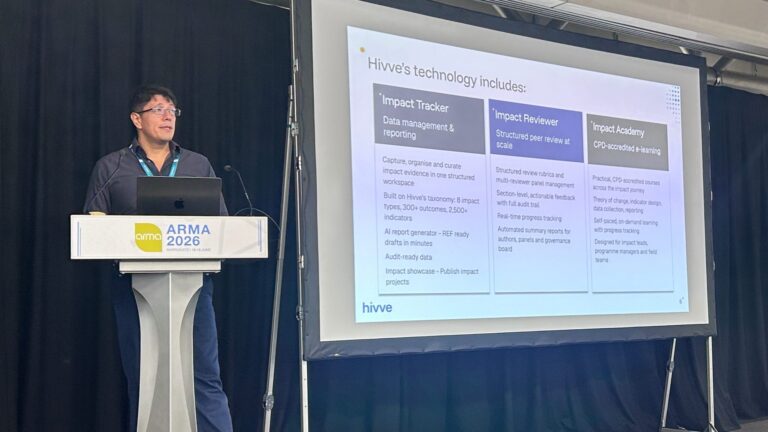
We combine AI with our impact expertise, methodology and taxonomy to help people capture, categorise and structure impact evidence more consistently. This allows information to be connected and aggregated across projects, programmes, organisations and portfolios, building a richer understanding of impact at every level.
Our ambition is to make it easier for people to contribute evidence as their work develops, use AI to help interpret and organise that information, and build a richer understanding of impact across projects, organisations and portfolios.
This creates opportunities not only to produce better reports, but to learn from evidence, identify emerging patterns and make better-informed decisions about where to focus effort and resources.
For a university, that might mean connecting evidence across researchers, faculties, institutions and external partners.
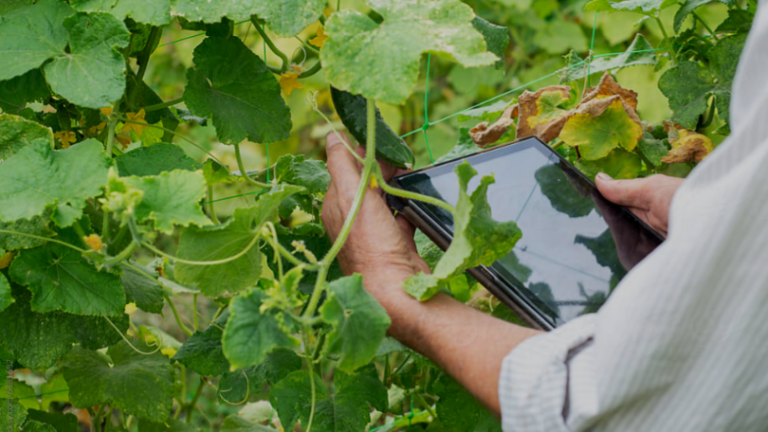
For an NGO or impact organisation, it could mean bringing together evidence from multiple partners and diverse sources, from field surveys and photographs to community feedback, to build a richer picture of impact across complex, long-running programmes.
For a funder or foundation, it could mean understanding common outcomes and evidence gaps across grantees and investees, while allowing each organisation to contribute its part of the picture.
When evidence is structured and connected, individual contributions can become collective intelligence.
Better evidence can help good work travel further
Organisations don’t measure impact simply because they want better reports.
They need evidence to understand what is working, make decisions, demonstrate accountability, secure support and communicate why their work matters.
Better evidence does not create the impact. But it can make that impact visible.
When meaningful impact becomes easier to see and understand, it becomes easier for others to recognise it, support it, invest in it and help it continue.
It also creates opportunities to learn from what works, share successful approaches and direct resources towards activities with the greatest potential to create positive change.
This is where the real value lies.
The goal isn’t simply to produce more impact reports. It is to make impact information genuinely useful to the people doing the work, the organisations supporting them and the communities they seek to benefit.
Keeping people at the centre
The greatest opportunity AI presents for impact practice is not replacing human expertise. It is giving people more time and better information to focus on what matters.
AI can help bring evidence together, identify patterns, highlight gaps and support reporting. People bring the context, relationships, critical thinking and judgement needed to understand what that evidence means and what should happen next.
At Hivve, we believe the future of impact practice lies in bringing these capabilities together: combining the efficiency of AI with rigorous methodology, credible evidence and human expertise.
Our ambition is to make good impact practice easier, more accessible and more valuable, helping more people and organisations understand their contribution to positive change and build on what they learn.
AI can do more of the heavy lifting, so people can focus on creating greater impact.
Discover Hivve’s approach to AI
Learn how we combine AI, impact expertise and evidence-based methodologies to make impact measurement and reporting more accessible, rigorous and useful.
Responses (0)
No responses yet. Yours would be the first.